Opinion

The best thing I ever filmed with a pair of smart glasses was my son, nearly two years old, discovering that a football is way more fun when you fall over on top of it.
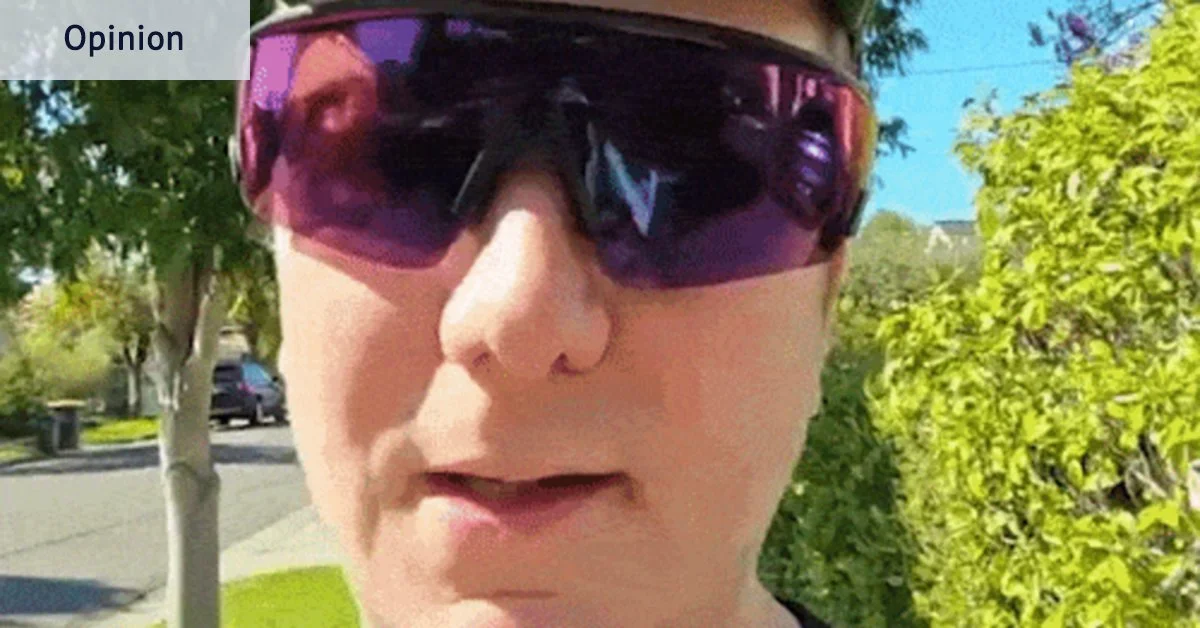
I was wearing Meta’s Oakley Vanguards, which I had on loan from the company and typically use when on long runs and half-marathon training. But they’re also great for precious moments with your kids.
My hands were full – they tend to be when you’ve got a toddler – and I said, “hey Meta, take a video”, and got a clip no phone could have. The moment you get your phone out to start recording something, is almost always exactly the moment it stops happening.
A few years earlier, with an older pair of Ray-Ban Metas, I got footage I still look back at now – kicking the footy around the oval with my wife, going for a run with a mate, splashing at the beach. Those videos look like being there, rather than watching someone film it.
Which is all to say I like these glasses. They’re fun and super useful. On a run, they play podcasts through bone conduction speakers, tell me how fast I’m going, read out my WhatsApp messages and let me film something without breaking stride. They look like ordinary Oakleys, just with a camera, microphone and AI built in. The only thing that really gave me pause was the price.
Now I’m apprehensive about something else.
I’ve spent the past fortnight writing stories about people using these things to film strangers without consent. Researchers at the University of Sydney went through 350 videos and found about 60 per cent of the covert ones involved potential harassment. Critics now call the category “pervert glasses”, while Digital Rights Watch has a better term: “Specs offenders.”
Which means my running glasses have become an uncomfortable presence for people who see me coming. Is he recording me? I have no way of answering which doesn’t sound exactly like what a creep might say.
The shift in attitude has meant I’ve stopped wearing them in public as much, given the weird looks and occasional uncomfortable questions about whether I’m recording.
We have been here before. Google’s first effort, Google Glass, died a decade ago because its wearers were routinely abused in bars and labelled “glassholes”. We weren’t ready.
Melbourne has watched the same movie before with dockless bike share and e-scooters, both of which worked well technically and both of which ended up in the Yarra. The technology was defeated by the few bad apples who used it worst.
Smart glasses are well intentioned and technically ready. Socially, they are being wrecked at a rapid clip by their worst users.
There’s a second problem: who is holding the reins. Meta has spent 20 years demonstrating it will collect what it can until someone makes it stop. It might sound like an unfair caricature, but it’s also the reputation the company has earned, and reputation is everything when you’re asking strangers to trust a camera on your face.
Meta’s answer, from chief technology officer Andrew Bosworth at the weekend, is that the capture light can’t be switched off and covering it stops the camera working. And it’s true: my Oakleys flash a bright white light when they’re recording anything.
The $89 Kmart pair that sold out last month makes no such promise, and I have no confidence that a cut-price, own-brand device is a gold standard for anything.
It’s worth pointing out that Australia has no general right to privacy in public. Filming at the beach or an oval is fair game. It’s those in-between places – the gym, the cafe, the change room corridor at Kmart – where the law says it’s OK to film, but every social instinct says absolutely not, and for good reason.
So here’s my take, as someone who likes the glasses and wants to keep using them. Let’s pause. Not forever, and not with an import ban, which the attorney-general has already ruled out. Just long enough to work out the rules. We’re not ready for smart glasses, but maybe we can be.
At a minimum, recording indicators should be mandatory, standardised across every brand sold here, and tamper-proof. Greens senator David Shoebridge is right that nothing currently requires a light, a sound, or any outward sign at all.
A few more ideas worth considering: a specific offence for covert capture by wearable cameras, so victims stop depending on a privacy tort that makes them prove serious harm. And product standards built into the device, including bystander-blurring on by default. And an obligation on manufacturers to act on misuse rather than merely selling the hardware and shrugging.
These things would carry a real cost, too, because there are people for whom these glasses are not a toy. The eSafety commissioner points out they can read text aloud to blind users and caption live speech for deaf ones, hands-free.
The answer isn’t to simply ban the glasses. It’s to create better rules to stop the creeps.
Let’s get this right so I can stop the uncomfortable looks and go back to just being the bloke who filmed his son falling over a football.
The Market Recap newsletter is a wrap of the day’s trading. Get it each weekday afternoon.
 David Swan is the technology editor for The Age and The Sydney Morning Herald. He was previously technology editor for The Australian newspaper.Connect via X or email.


